
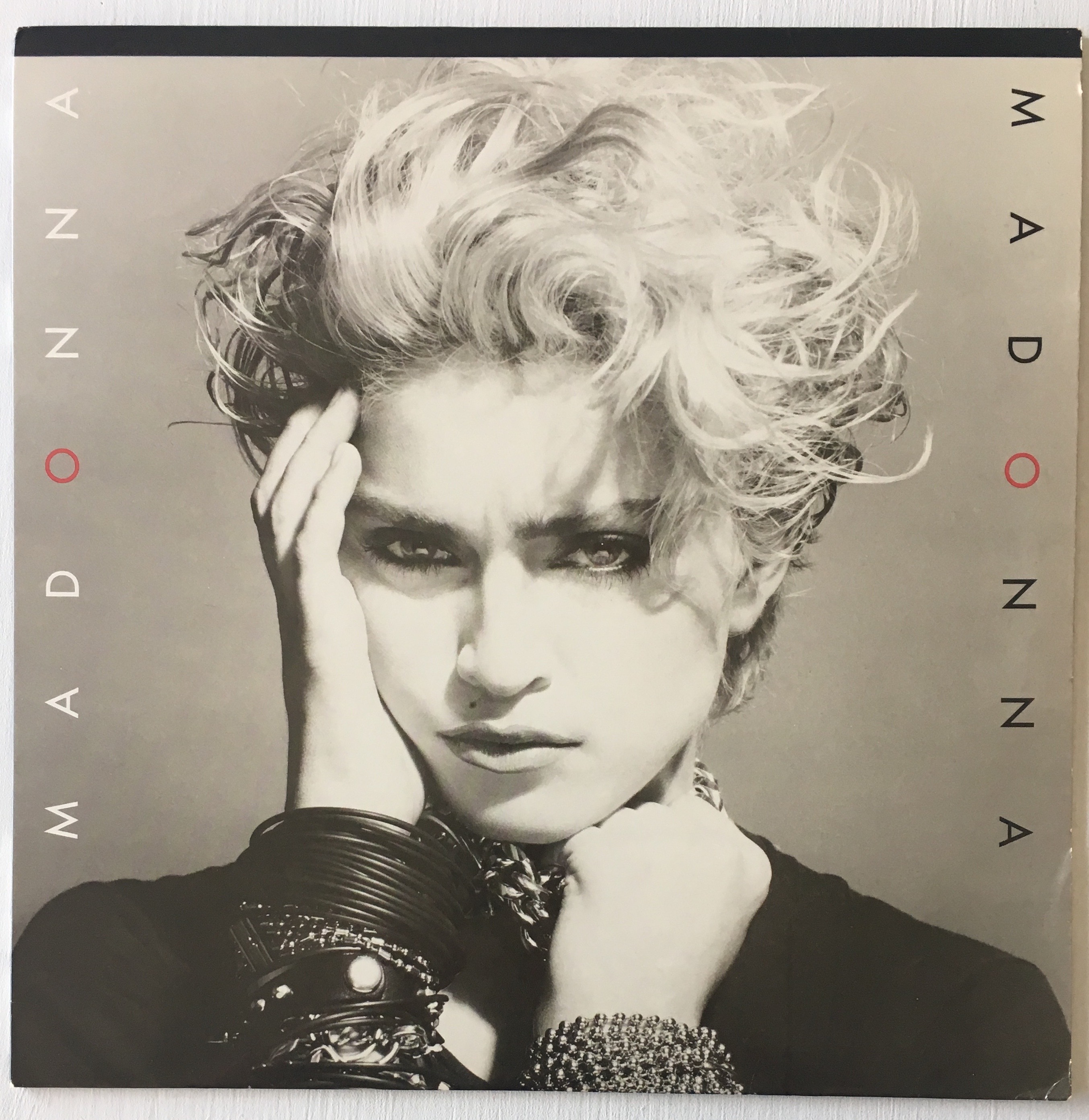
From my earliest memories, I idolized strong, independent, female screen characters. Fanny Brice, Ann Marie, Mary Richards, Holly Golightly, Tracy Chambers, Princess Leia, and Kira, the roller-skating muse, might find a place for romance to fit in alongside their fierce determination for success somewhere along life’s path, but their life goals superseded their romantic goals. I perceived such a lifestyle as ideal, but fictional, until July 1983.
Not long after I turned fourteen, I analyzed and wrote in my journal about the song “Borderline” for several months. It started one evening in July of 1983 when three minutes and 58 seconds changed everything as I’d known it up until then. Suddenly, the world looked, sounded, and felt differently after seeing this video for the first time. The life I had always wanted had become possible. Beginning in the summer of 1983, two years after MTV premiered in urban markets, Night Tracks premiered on TBS. Rural kids finally had access to a weekly, three-hour block of music videos on Friday nights. My brother and I were consumed by this program and never missed an episode that summer. On those Friday nights, I would lie on the crushed-velvet gold sofa in our living room, while my brother lay on the floor directly in front of the television, due to his limited vision. We kept the television volume on high to override the whir of the box fan motor that churned the night air from outside, in, through the screen door, providing a bit of relief from the sticky heat of Midwestern summer nights. One memorable night, a young woman that I’d never heard of appeared on the television screen. She had a very Catholic name, but she was saying and doing and wearing things quite unlike any woman, Catholic or otherwise, I had ever seen.
The messages I had received from every piece of media and art about becoming a woman up until that moment in 1983: be pretty, but not so pretty that girls won’t like you, be thin, be well-dressed, be thin, be smart, but not so smart that boys won’t like you, be thin, don’t ever have a hair out of place, be thin, be patient, kind, forgiving, gracious, and by all means, be willing to burn even the tiniest of hairs off of your face, legs, and bikini line to be pretty…and least I forget, be thin. This woman’s bra straps were showing, her hair was not brushed, and even a tiny hint of a belly could be detected in her tight lime green and black printed wrap skirt. But more important than her appearance, it was this woman’s striking independence in the music video for Borderline that most fascinated me.
Immediately, Madonna represented the possibility of a desirable lifestyle for me, and for the first time, an attainable one as well. I did not infer the experience portrayed in “Borderline” as acting. I saw a nonfiction story of a woman calling the shots and controlling her destiny. She was not afraid to tell men to stop attempting to push her beyond her limits. Most importantly for me, she was not afraid to say how she felt or what she thought, something I had never been able to do. “Feels like I’m going to lose my mind. You just keep on pushing me over the borderline. Just try to understand, I’ve given all I can.” I wrote those lyrics in my journal again and again, in an effort to convince myself that I could live in a world where I could define and defend my boundaries. This woman appeared to be smart and pretty. She exhibited a new attitude for women, about women. It was ok to be in control and beautiful, feminist and feminine. That’s the real-life story I inferred from watching a music video at age fourteen. You may be wondering why I perceived the story arc of a music video as nonfiction. That’s the beauty of art, it can be interpretive, and my interpretation of this song could not have been more empowering. There are things that Madonna has done and said, and pieces of art that she has created since then, that are not aligned with my values or my vision of who I aspire to be. In 1983, Madonna exhibited an empowering possibility for me, unmatched with anything I had witnessed in the first fourteen years of my life. After Borderline, I believed it was possible to find the courage to move away from my rural existence. I believed I could become a creative and independent woman. I believed I could have the urban life I had dreamed of for as long as I could remember. I would find my role in the entertainment industry. What, exactly, my role would be, I wasn’t quite sure yet. I’m still working on it.
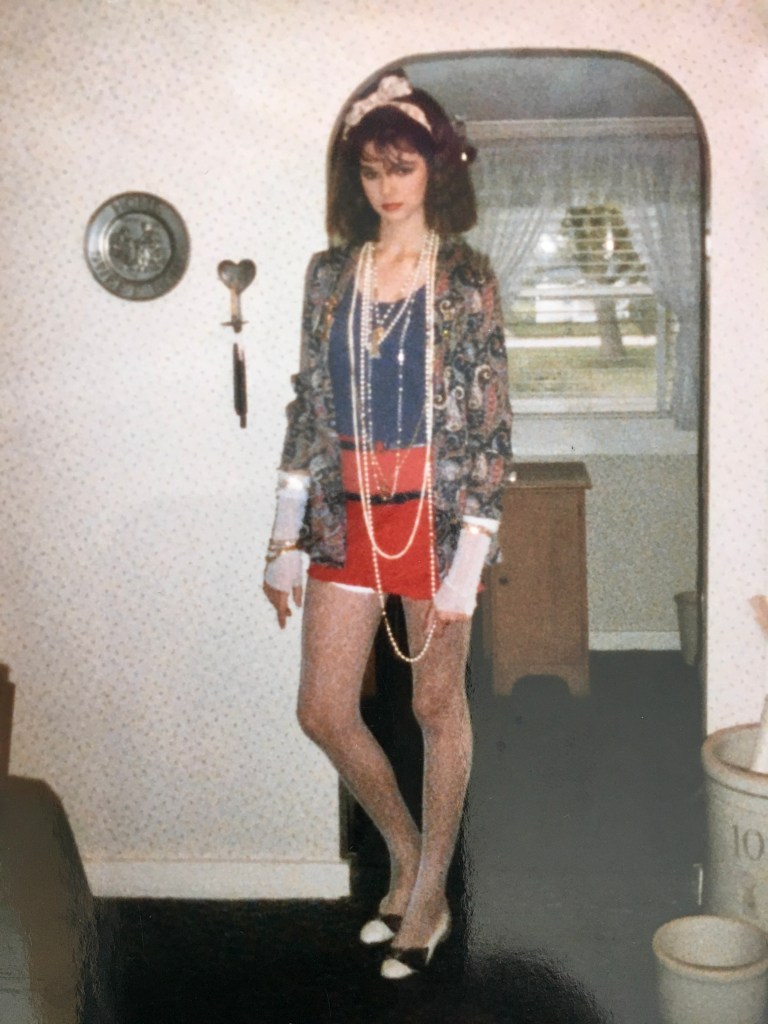
My attempt at replicating Madonna’s Live Aid look in 1985. I was thrilled when she showed up as a brunette for her performance on that historic day.
 The Listening Gallery