
Why Salt-N-Pepa is so immensely Vital to American Roots Music by Tracy Lane

Female artists who are my age and older are not celebrated as they should be for their historic contributions to American culture. I am committed to changing this disparity. Early this year, we learned that our nation would celebrate the 50th anniversary of DJ Kool Herc’s unprecedented approach to record-spinning at a party that took place on August 11, 1973. That event resulted in what might be the most authentic American music genre ever created. For me, that means heralding the world’s first critically and commercially successful all-female hip-hop artist.
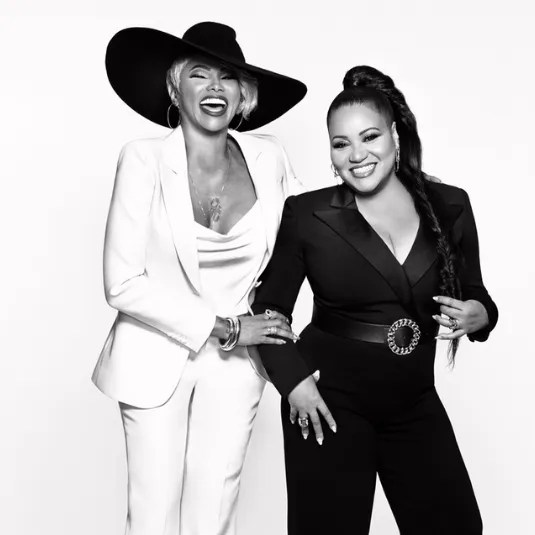
Sandra Denton, Cheryl James, and Deidra Roper, three teenage girls from Queens, NY released their debut album in 1986. Hot, Cool & Vicious sold more than 1.4 million copies in the US, making Salt-N-Pepa the first female hip-hop act to achieve both gold and platinum status in album sales. Their single from that album, “Push It,” was the first track by a female hip-hop act to be nominated for a Grammy. Within their first decade, S-N-P became the first female act to win the Grammy for Best Rap Performance by a Duo or Group for “None of Your Business.”
While videos objectifying women’s bodies and music with overtly sexist lyrics became staples for many of the emerging male hip-hop artists of the late 1980s and early 1990s, Salt-N-Pepa continued to positively affect culture through their sound and style. With the group’s uniquely iconic fashions and Sandra’s and Cheryl’s profoundly empowering rhymes, they have demonstrated to women in the music industry that we can stay true to our values as we accelerate our own vision for success. Their look is so vital to music history that these socially conscious and fashion-forward women were featured in an editorial for Vogue magazine in 2016, thirty years after the release of their debut album. The “Push It” jacket holds such a heralded space in our collective cultural consciousness, that one is ensconced in a glass case at the Rock & Roll Hall of Fame. I had the opportunity to see it last summer, while I was there to speak on a music industry panel about our organization’s work to push for the safety and equity of women in music.


As a young woman coming into adulthood in the late 20th century at the same time as these trailblazers, I found them to be immensely inspiring and courageous. Based on my own history of verbal and physical sexual abuse while working in the entertainment industry during the late 1980s and early 1990s, I can surmise that these women may have been subjected to similar experiences. Their perseverance in an industry rife with misogyny and racism, and in a genre that was at that time, and still remains today, to be exceptionally male-dominated is monumental. As a 17-year-old girl in 1986, witnessing a 17-year-old female dj was a life-changing moment in music history. Before Deidra “Spinderella” Roper, I had never seen a woman behind the turntables, a role I had craved but believed to be exclusively for men. “Push It” became a favorite ultra groove when I became a club dj in 1994. Although Spinderella no longer spins the wax for these two magnificent MCs, I must give props for the infectious grooves she created that can still move multiple generations to the dance floor nearly forty years after she crafted those beats. For many, push it may bring to mind a physical manifestation of the phrase. For me, it has always been an ideology, an expression of the remarkable strength of Salt-N-Pepa and their ceaseless energy to push aside the barriers that surround women in our industry.
 The Listening Gallery